



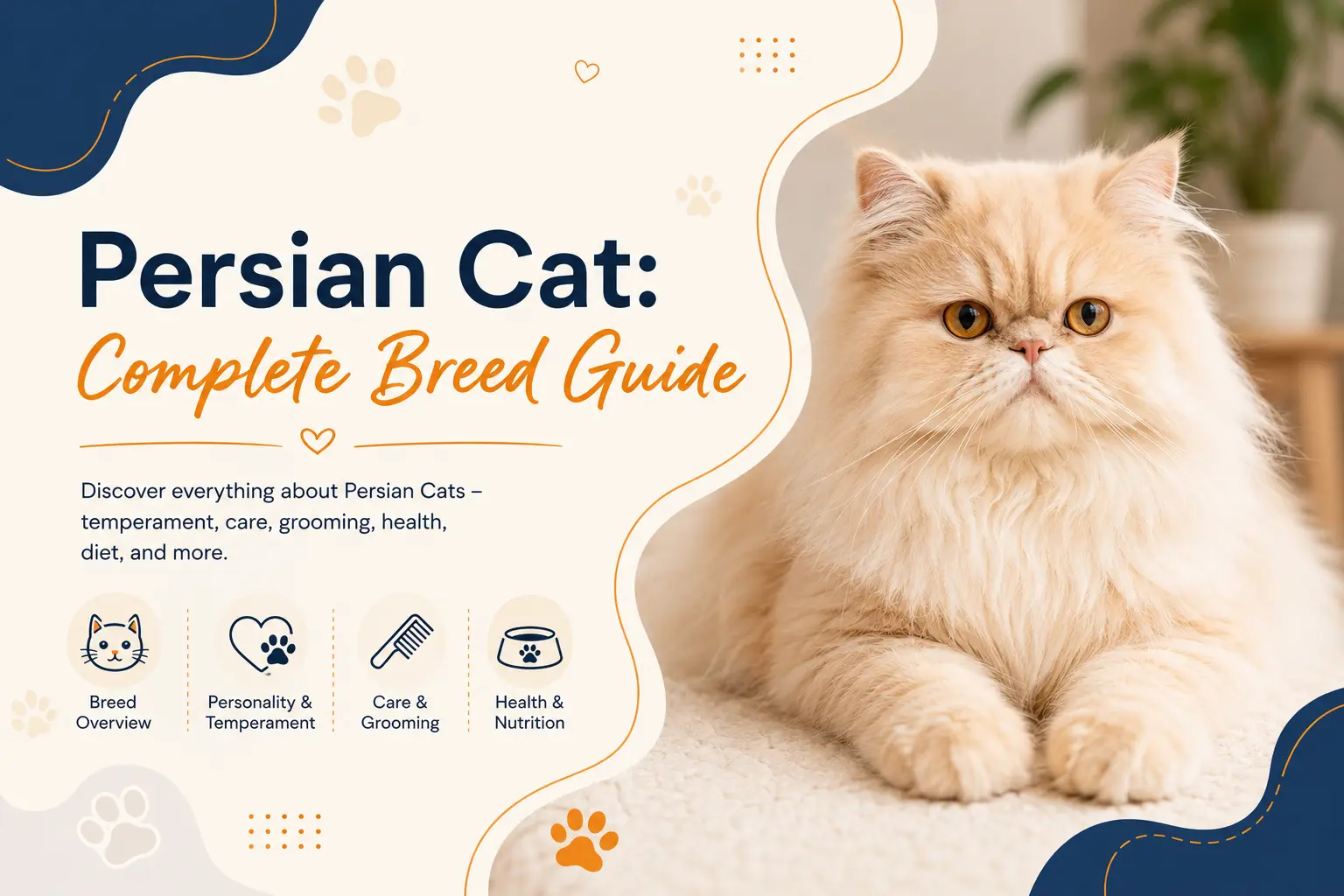
If you have ever scrolled through cat videos online, chances are you have stopped on a fluffy, round-faced cat lounging like royalty. That is almost always a Persian cat one of the oldest and most recognisable cat breeds in the world, and one of the most popular pet choices among Indian cat owners today.
Persian cats are known for their long, silky coats, calm temperament and distinctive flat faces. But owning one is very different from owning a regular domestic shorthair. This breed comes with specific grooming needs, health considerations and lifestyle requirements that every prospective or current owner in India should understand before bringing one home.
In this guide, we cover everything about the Persian cat breed origin, types, characteristics, lifespan in Indian conditions, daily care routine, and what you can expect to pay for one in India so you can make an informed decision and give your Persian cat the life it deserves.
What Is a Persian Cat? Origin and History
The Persian cat's story begins centuries ago in the region of ancient Persia, modern-day Iran, where long-haired cats were first documented and prized for their unusual, luxurious coats. These cats were later brought to Europe in the 1600s, where breeders refined their appearance over generations into what we now recognise as the traditional Persian a rounder head, shorter muzzle and denser coat than their original ancestors.
Today's Persian cat is largely a product of selective breeding in Britain and the United States during the 19th and 20th centuries. Breeders gradually shaped two broad lines:
- Traditional Persian (Doll Face): Closer to the original Persian cat's proportions, with a moderately flat but still visible nose.
- Modern/Show Persian (Peke-Face or Extreme Punch-Face Persian Cat): Bred for an exaggerated flat face, very short nose and rounder skull the type most commonly seen at cat shows.
Both lines are genetically Persian cats, but the difference in facial structure significantly affects health, breathing and grooming needs something we will return to later in this guide.
Types and Varieties of Persian Cats
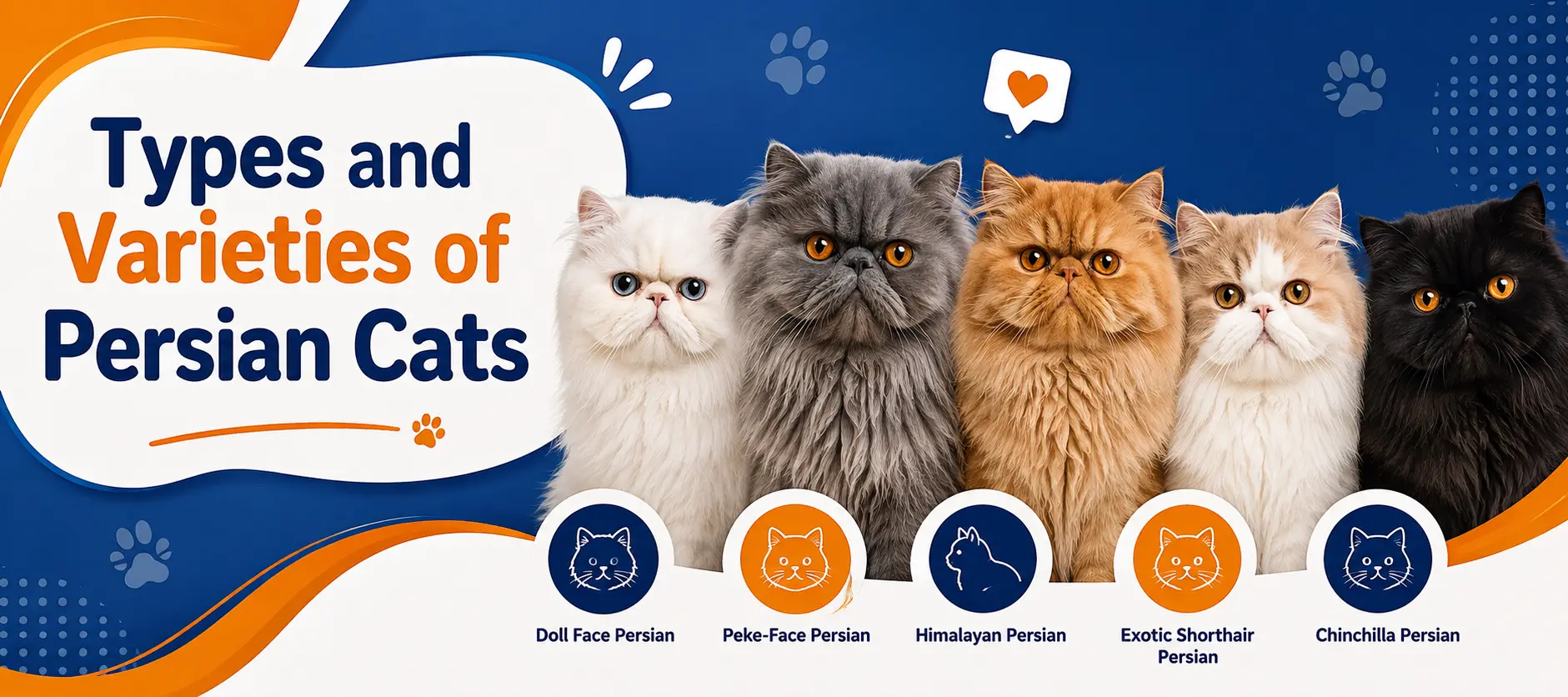
One of the most common questions new owners ask is how many types of Persian cats actually exist. The breed is officially recognised in dozens of colour and coat combinations, but they generally fall into these Persian cat varieties:
- Classic Persian Cat (Doll Face): The original, moderate-faced Persian with a gentle profile and fewer breathing issues.
- Extreme Punch-Face Persian Cat: The ultra-flat-faced show variety, popular for its dramatic look but prone to respiratory and eye problems.
- Chinchilla Persian: Known for a silver-tipped coat and striking green or blue-green eyes.
- Himalayan Persian (Colourpoint): A Persian-Siamese cross with blue eyes and colourpoint markings technically a cross breed Persian cat.
- Peke-Faced Persian: An older American show variety with an extremely pushed-in face, now less common.
- Solid, Bi-Colour, and Tabby Persians: Classified purely by coat colour and pattern rather than face structure.
In India, most pet stores and breeders sell either the Classic (Doll Face) or the Extreme Punch-Face Persian cat. If you are a first-time owner, the Classic Persian is generally the healthier and lower-maintenance choice, especially in India's hot and humid climate.
Persian Cat Characteristics and Behaviour
Persian cats have a very distinct personality that sets them apart from more active breeds. Understanding their persian cat characteristics and behaviour will help you decide if this breed fits your household.
Physical characteristics:
- Long, thick double coat requiring daily brushing
- Broad, rounded head with a short muzzle
- Large, expressive round eyes (copper, blue or green depending on variety)
- Short, sturdy legs and a stocky, muscular body
- Adult weight typically between 3–5.5 kg
Behavioural traits:
- Calm and gentle: Persians are famously low-energy and prefer lounging over climbing or jumping.
- Affectionate but not clingy: They enjoy companionship but are equally happy relaxing alone in a quiet corner.
- Quiet vocalisation: Persians rarely meow loudly, making them well suited to apartment living.
- Sensitive to environment: Sudden noise, chaotic households or frequent changes in routine can stress this breed more than most.
- Low prey drive: They are generally not big hunters or jumpers, unlike breeds such as Bengals or Abyssinians.
This laid-back temperament is exactly why Persian cats are one of the most recommended breeds for first-time Indian pet owners, working professionals, and families with older children.
Persian Cat Lifespan in India
A common and important search among prospective owners is Persian cat lifespan in India specifically, since climate and care standards affect longevity.
On average, a well-cared-for Persian cat lives 12 to 17 years, with many indoor cats crossing the upper end of that range when given proper nutrition, regular vet checkups and a stress-free environment.
In Indian conditions, a few factors can shorten or extend this lifespan:
- Heat stress: Persian cats' thick coats make them vulnerable to heat exhaustion during Indian summers. Access to cool, shaded, air-conditioned or well-ventilated spaces significantly improves their comfort and longevity.
- Respiratory health: Extreme punch-face Persians are more prone to breathing difficulties, which can be worsened by dust and pollution common in Indian cities.
- Diet quality: Cats fed a balanced, breed-appropriate diet (rather than table scraps or generic cat food) consistently show better long-term health outcomes.
- Preventive care: Regular deworming, vaccination and dental checkups play a major role in preventing the kidney and dental issues Persians are genetically predisposed to.
Persian Cat Care and Maintenance Tips
Persian cat care and maintenance is more involved than most breeds this is the single biggest adjustment new owners need to prepare for.
1. Daily Grooming
The long coat mats easily if not brushed daily. Use a wide-tooth metal comb followed by a slicker brush to prevent tangles, especially around the belly, legs and behind the ears.
2. Eye and Face Cleaning
Flat-faced Persians, especially the extreme punch-face variety, often develop tear staining due to blocked tear ducts. Gently wipe the eye area daily with a clean, damp cloth to prevent staining and infection.
3. Bathing Routine
Unlike most cats, Persians benefit from a bath every 3–4 weeks using a cat-specific shampoo. This helps manage natural coat oils that would otherwise cause matting.
4. Diet and Nutrition
Persian cats do best on high-quality, breed-specific dry or wet food formulated for long-haired breeds these typically include ingredients that support coat health and reduce hairball formation. Fresh water should always be available, and portion control is important since Persians are prone to weight gain due to their low activity levels.
5. Litter Box Hygiene
Because of their long fur, Persian cats can track litter or get litter stuck to their coat. A low-tracking, unscented litter and a covered litter box help maintain hygiene.
6. Indoor Living
Persian cats are best kept as indoor pets in India. Their calm nature, low prey drive and sensitivity to heat make outdoor exposure risky and unnecessary.
Petcarto stocks grooming combs, hairball-control cat food, and breed-specific nutrition designed for long-haired cats like Persians making it easier to maintain your Persian cat's coat and health without guesswork.
Persian Cat Breed Names and Face Types
New owners are often confused by the variety of Persian cat breed names and face types used interchangeably online. Here is a simplified breakdown to clear the confusion:
| Face Type | Also Called | Key Feature |
|---|---|---|
| Doll Face | Traditional/Classic Persian | Visible nose, moderate flat face |
| Peke-Face | Extreme Persian | Very short nose, deep facial folds |
| Punch Face | Ultra-flat/Show Persian | Nose almost level with the eyes |
Colour-based breed names such as Chinchilla, Himalayan, Bi-Colour, Tortoiseshell and Smoke Persian describe coat pattern rather than a separate breed — all fall under the single Persian cat breed with different face type and coat classifications layered on top.
Indo-Persian and Cross-Breed Persian Cats
In India, you will frequently come across cats advertised as Indo-Persian cats or cross-breed Persian cats. These are typically Persian cats crossed with local domestic or semi-longhair cats, resulting in a cat with some Persian traits a fuller coat, rounder face but a hardier constitution better suited to Indian street and climate conditions.
Indo-Persian cats are usually:
- More heat-tolerant than purebred Persians
- Less prone to respiratory issues than extreme-face varieties
- More active and slightly more independent
- Significantly more affordable than certified purebred Persians
For families wanting the Persian look without the intensive grooming and health monitoring a purebred requires, an Indo-Persian or cross-breed Persian cat is often a practical and budget-friendly middle ground.
Persian Cat Price in India
Persian cat prices in India vary widely based on lineage, face type and location:
- Indo-Persian / Cross-breed Persian cat: ₹3,000 – ₹8,000
- Classic (Doll Face) Persian cat: ₹8,000 – ₹20,000
- Extreme Punch-Face / Show-quality Persian cat: ₹20,000 – ₹50,000+
Beyond the initial purchase price, budget for recurring costs: grooming tools, breed-specific food, vet visits, vaccinations and litter Persian cats generally cost more to maintain monthly than short-haired breeds due to their grooming and dietary needs.
Frequently Asked Questions About Persian Cats
What is a Persian cat known for?
A Persian cat is known for its long, luxurious coat, round flat face, large expressive eyes and calm, gentle temperament. It is one of the oldest recognised cat breeds, originally from Persia (modern Iran).
Is a Persian cat a good pet for apartments?
Yes. Their low energy levels, quiet nature and minimal jumping or climbing make Persian cats one of the best breeds for apartment living in India.
Do Persian cats need daily grooming?
Yes, daily brushing is essential to prevent their long coat from matting, along with regular eye cleaning for flat-faced varieties.
How long is the average life of a Persian cat?
The average life of a Persian cat ranges from 12 to 17 years with proper nutrition, grooming and preventive veterinary care, particularly important in India's climate.
Is "Pareshan cat" the same as a Persian cat?
This is a common misspelling/mispronunciation of "Persian cat" in India there is no separate breed called a Pareshan or Prussian cat. Both terms refer to the same Persian cat breed discussed in this guide.
What is the difference between a Persian cat and an Indo-Persian cat? A Persian cat is the purebred version with defined lineage and standard features, while an Indo-Persian cat is a cross-breed with partial Persian ancestry, typically hardier and more affordable.